Sunday, 22 July 2012

52 Short Stories in a Year - 1 month update

After deciding to take up the challenge of writing 52 short stories in a year, here is my update after finishing the first month on 21st July.


Name Type Word Count Status
The Ship Short Story 3793 Finished - to edit
Take me Back with You Short Story 2528 WIP
Take me Back with You Novelisation 9373 WIP
The Lost Train Short Story 3362 WIP
The Other Set of Feet Short Story 3749 Finished - to edit
The Hunter Novella 5543 WIP
Once We Were Children Short Story 2513 Finished - to edit
The Assignment Short Story 2737 WIP
33598

I'm actually one story behind on getting one per week, but I've averaging out at a little over 1000 words a day, and considering I'm also fitting editing a novel into the tiny window of free time I have each day I'm pretty happy with my progress.

The Ship is a short story about a boy obsessed with supertankers who falls foul of a school bully.  I did a ton of research on supertankers and stuff and then ended up cutting most of it out as my attempt at writing literary fiction ended up more action-based.

Take me Back with You is a kind of romance, which is a little strange because I've never written anything like that before.  The short story is pretty much a summary of the story which I decided to make into a novel of perhaps 60k or so, and now the main plot line is mapped out in my head I probably won't bother finishing it as a short story.

The Lost Train is about a pair of kids who find a train sticking out of the ground and discover it is one that went missing thirty years before.  I wanted to write a story about the now closed North Cornwall Railway, and this is it.  I'm a little stalled on the plot at the moment but I'll get to it eventually.

The Other set of Feet is a weird little story about a man trapped in his bedroom by a supposed murderer hiding under his bedsheets.  It's kind of comical, kind of just plain weird.

The Hunter (provisional title) is a novella set in the world of my novel, The Tube Riders, and introduces a few characters who may or may not make it into the second part of the story.  Still thinking about it.

Once we were Children is an attempt at writing a nostalgic story about an old man thinking back on good family times as he faces his death.  I tried to write in the style of a movie me and the wife watched recently about a man who went off on a last journey with his dog after his family fell apart and they ended up dying together.  My story is nowhere near as good, though.

The Assignment is what I think is the ace in the pack, a short story about a young man working for a travel guidebook who is sent to an island never before visited by people in order to write a tourist guide.  There he will discover all sorts of strange things.  I got the initial idea from a dream I had of a giant aquamarine blue factory sitting on a an island beside a massive towering cliff.  It's going to have strange beings, action and crazy discoveries about the human race before its done, and the only one of the lot so far that I'll probably bother subbing to pro magazines.


Overall, I'm pretty happy with my progress.  It might not be the 10k a day that some stay-at-home-type writers churn out, but its actually more by word count than I've written in the last 18 months combined, and I feel connected with my words in a way I haven't in a long time.  The old turns of phrase are starting to come back and the plots are getting more and more intricate with each new idea.  To say I had been stagnating is an understatement, but in the wake of failing to get an agent for Tube Riders back in 2010 my writing basically fell of a cliff.

I'm still struggling to find more than an hour a day to write which is a worry, but that's life.  I'm not in a financial position to quit any of the work I do and I'm not about to give up my other hobbies.  Variety is the spice of life and all that, I just wish it was easier to stay awake from 10pm to midnight after working a fourteen hour day.

Still, progress is progress.  If only a few more people would buy my book then things would be great.

CW.

Friday, 13 July 2012

Castles Made of Sand & The Tree


I wanted to write a little bit about the two most recent stories I'm publishing on Amazon, Castles Made of Sand, and The Tree.  Both contain a moral message of sorts.

The first of these, Castles Made of Sand, is a space exploration story set on an alien world.  Two explorers, Randall and Boyd, come across a number of giant sandcastles on a beach and set about trying to find out who made them and why.  The message in this story is very much about the care humans must take when they interact with other living beings, be them animals or perhaps one day creatures from another world.


This story is especially important to me because it kick started my writing career back in 2006, and was the first significant story I had written in four years.  2002/3 was a golden period for me, and some of my best stories, including Joyriders, The Ageless, Benny’s Harem and the original short story from which my novel Tube Riders came, were written around that time.  However, I failed to sell anything, got disillusioned and gave up for a while.  Then, in 2006, I wrote Castles Made of Sand, discovered the ease of submitting via the internet, and it quickly became my first paid sale, after a couple of earlier ones had fallen through in the way that they so often do in the small press.  It has since been sold as a reprint to the magazine Aoife’s Kiss, and was published in 2009.  Now the rights are mine again, it’s taking its turn on Amazon.

The Tree is a dystopian story set in the future.  It was a bit of an experiment, written as it is in the form of a diary by a girl called Cybil, whose father works somewhere off-world, and one day returns home bringing with him a gift that Cybil and her brothers and sisters have never seen before – a little oak tree in a pot.  The story focuses on the reaction of the children and the fate of the little tree.


In school I remember reading what I thought was a short story but on investigating (thanks, Google) it seems to have been a poem, called We are Going to See the Rabbit, by an English poet called Alan Brownjohn.  The Tree is heavily influenced by this poem.  I found the poem on the net here, but have pasted it below for your interest (no copyright infringement intended).

we are going to see the rabbit

We are going to see the rabbit,
Which rabbit, people say?
Which rabbit, ask the children?
Which rabbit?
The only rabbit,
The only rabbit in England,
Sitting behind a barbed wire fence
Under the floodlights, neon lights,
Sodium lights,
Nibbling grass
On the only patch of grass
In England, in England
(Except the grass by the hoardings
Which doesn’t count.)
We are going to see the rabbit,
And we must be there on time.
First we shall go by escalator,
Then we shall go by underground,
And then we shall go by motorway
And then by helicopterway,
And the last ten yards we shall have to go
On foot.
And now we are going
All the way to see the rabbit.
We are nearly there,
We are longing to see it,
And so is the crowd
Which is here in thousands
With mounted policemen
And big loudspeakers
And bands and banners,
And everyone has come a long way.
But soon we shall see it
Sitting and nibbling
The blades of grass
On the only patch of grass
In- but something has gone wrong!
Why is everyone so angry,
Why is everyone jostling
and slanging and complaining?
The rabbit has gone,
Yes, the rabbit has gone.
He has actually burrowed down into the earth
And made himself a warren, under the earth.
Despite all these people,
And what shall we do?
What can we do?
It is all a pity, you must be disappointed.
Go home and do something else for today,
Go home again, go home for today.
For you cannot hear the rabbit, under the earth,
Remarking rather sadly to himself, by himself,
As he rests in his warren, under the earth:
“It won’t be long, they are bound to come,
They are bound to come and find me, even here.”
ALAN BROWNJOHN
It's a pretty interesting thought to have no grass, rabbits or trees left, and while we might look around us now and think that such a situation might never happen, it's important for all of us to make an effort to look after the world we live in just to ensure that a world like that in the poem above or in The Tree never happens.
CW

Tuesday, 10 July 2012

How Much is a Short Story Worth?


How much is a short story worth?

I recently ran a free promotion for my short story, The Cold Pools, giving away 2041 copies in three days after it was picked up by the popular free ebook website Ereader News Today.

A couple of days later I received this comment as part of a generally positive 4-star review:

This little story is very good and certainly worth borrowing, but not I think given its brevity, paying 99 cents for...”

Don't get me wrong, I was happy to receive the review and pleased that the reader took the time to write it, but it got me thinking.  So, this reviewer doesn’t think my story is worth 99 cents.  In that case, what is it worth? And what is 99 cents worth?

There seems to be a growing attitude that just because something is digital and can't be held in your hand then it has no value.  Hence the proliferation of music/movie/ebook piracy, which is effectively theft from the comfort of one's own home.  I have no problem at all with listening or watching something on Youtube, which I consider to be a form of borrowing, but downloading pirated music or movies is stealing, so I don't do it.  I don't care what other people do, but I know I'd be mighty pissed off if there were 30,000 copies of my writing being passed around without my authorization.


Anyway, back to the main thread, the value of a short story.

At the time of writing, The Cold Pools has sold 8 copies, for each of which I made 35 cents. In addition to this it was originally published in 2009 in an online magazine which paid me $15. I paid $3 for the cover image for the ebook, so currently it breaks down like this –

Paid sales + $15
Amazon sales 8 at 35c = + $2.80
Cover art - $3

Equals $14.80 total profit.

So, not counting the ezine sale, I’m currently making a loss on Cold Pools.

However. 

The reviewer’s concern was that the story wasn’t worth paying 99 cents for. Cold Pools is 3500 words long, which is admittedly short for an ebook, although it was packaged with the first chapter of a novel as a bonus (and not a shameless form of self-promotion, honest ... ;-) ). I write at roughly 1000 words an hour, plus these things always take a couple of hours to edit and format. Even saying it took me six total hours to write Cold Pools (which is probably pretty conservative, it’s likely double that at least) it still works out at a pretty measly hourly wage.

Currently, assuming it took just six hours, I’ve made $2.46 per hour from Cold Pools. I’ve sold 8 copies in three months. Let’s say I sell 1000, which at this stage looks pretty unlikely to happen within twenty years. That would be $350, or $58/hour. Much better, although considering I can easily earn $50/hour teaching English it really isn’t that much.

Moving on, I’d like to consider just what 99 cents is worth. I live in Japan, so I’ve done a conversion in order to investigate. 99 cents is 78 yen, which, frankly, is hardly anything.  We have 100 yen shops for a reason, and that is because very little is valued at less.  With this knowledge in hand, I decided to visit my local 7Eleven to see just what was worth less than my story, and what was worth more.


Here it is, the winner.  My story is worth exactly the same amount as this boiled egg, which comes in a kind of soy sauce and is designed to be put into a bowl of ramen noodles.  Now, I know you get a physical product, whereas my story is just a bunch of words on a screen, but its not like the egg and the packaging it comes in is designed fresh each time - it is just replicated on the production line, just like my story.  You see what I'm getting at?  78 yen is probably worth it for the hours it took someone to design that product, even if the number of potential sales is as many as there are chickens.


This packet of sliced, processed ham is worth slightly less, at 75yen.  It was one of only perhaps four items that actually cost less than my story.  Among the others were a cheap single meal tub of catfood and a single disposable razor.  There wasn't a single chocolate bar that was cheaper than my story.  Believe me, 99 cents is not a lot.


And this bottle of Pom orange juice, at 157yen, is worth almost exactly twice as much as my short story.

Interesting.

I guess it all comes down to how you perceive value.  I welcome all reviews on my work and if people think my writing sucks, then so be it.  It's all up to you.  What does concern me is that a lot of readers don't consider our work to have any value at all.  Do plumbers put in pipes for free?  Do bank managers hand out free mortgages?  Do teachers give free lessons?  Only if they're idiots.

Of course services are products aren't free.  Generally, when something is free it falls into two categories - charity or promotional.  It is the second that directly effects me so I'll focus on that.  Incidentally, on my visit to the 7Eleven I was given this bottle for Lemon Volvic as a service, because I'm pretty much in there every day spending money.


It was a nice gesture, and it was appreciated.  But does it mean that I now expect to get all my bottles of water free every time I go into 7Eleven?  Of course not.  The only point of giving me a free bottle of water was to encourage me to go back and shop there again.  Which of course I will, not just because it is the closest shop to my house but because the staff are nice to me and they stock stuff that I want.  It's no different to when I give my short stories away on Amazon, it's not out of the kindness of my heart, it is with the hope that readers will enjoy them and want to visit my "shop" again.

There are many, many writers out there who are nowhere near as good as me who are making far more money, and there are many far better making even less.  A lot of it comes down to marketing and how good you are at it.  I suck at marketing.  I'm not good at networking.  I'm not particularly prolific at making friends, let alone charismatic enough to make people I meet buy stuff I have written.  I have one novel out at the moment, The Tube Riders.  Everyone who has read it and reviewed it has said it's exciting, original, a great read.  These are not people I have paid or people I know, these are complete strangers.  It's got to the semi-final shortlist of a minor award, and I'm pretty confident it'll make the final five.  It took me three months just to write the first draft, and its currently priced at $2.99, which is less than a 500ml can of beer in my local 7Eleven (beer is pricey in Japan...!).  It's the cost of three boiled eggs, and about half the price of a Starbucks Coffee.  I've sold about 20 copies.  Is it worth this price?  Personally I think it's worth a lot more, but potential customers don't seem to agree.

It is a dangerous world we live in where creative media is considered of less and less value.  Art enriches life, especially good art, and while Amazon in particular is clogged with junk passing itself off as literature, there is still a lot of great writing to be found.  The famous indie writer Joe Konrath talks about a future where the only revenue from ebooks comes from internal advertising, but this is something that fills me with dread.  How far will we go to devalue something that so many people consider an enriching experience?  Something that entertains you or makes you think should have a value, be it music, art, film, literature.  People should be happy to pay for an experience that makes them happy, the same way that they'd pay to go on a rollercoaster or take a parachute jump.

So criticise all you like, but never say my work or the work of all the thousands of other writers, artists, film-makers, musicians and other creative types has no value, because you're wrong, it does.

CW

Thursday, 28 June 2012

The Challenge - 52 Short Stories in a Year


Recently I read this blog post by Dean Wesley Smith on how it was possible to earn a living writing short fiction.  Until then I had never heard of Dean, but it seems he's a pretty well-respected speculative fiction writer with a huge number of credits to his name, both traditionally published and indie-published.

His blog caused a huge backlash, particularly on Kindleboards, with numerous indie-writers churning out several thousand words arguing whether he was right or wrong.  I've never been a big one for forums (to be honest, the less time I spend on forums the better – while they can be a great place to learn and make friends they can also suck valuable hours out of a busy day) so I ducked out of that conversation early in order to try to find out for myself.

I know for a fact that you can make good money selling short stories to magazines.  Twice I've cashed checks for well over a hundred dollars for short stories I’ve sold, and of course the possibilities of indie-publishing are infinite.

For me, the biggest problem has always been the work ethic.  I know I can write – I have eight novels, eighty-odd short stories and perhaps twice as much unfinished work sitting on my hard-drive.  I’ve just never been that prolific.  I've never written more than one novel in a year and perhaps 20 short stories in a year is my best effort.

There are many examples from history of writers who've experienced huge success on the back of one book, some even on one short story.  Those people, while highly skilled, had huge elements of luck behind them, as well as the old case of right place, right time.  I've read wonderful books by writers who died unknown, so just writing a good book is not enough.  For the vast majority of us mortals, a high rate of productivity is the key to getting noticed and gradually becoming successful.  I have been trying to sell my writing for fifteen years, so if it takes a few more before I make any money out of it then so be it.

So for me, taking up the challenge of trying to write 52 short stories in a year is more about giving myself a reason to write than trying to prove anyone else right or wrong.  What I am going to do, though, is attempt to sell them.  The good ones at least.

In Dean's post he's very strict on sales channels and pricing.  He says to submit only to magazines offering 5c/word, which is considered by the SFWA to be a professional payment level.  These magazines are very hard to crack (believe me, I've been trying), so I'm going to lower my standards just a little to 3c/word.  I sold to Weird Tales at 3/c a word in 2008 and made a perfectly acceptable amount.  However, I'm done with token payment and for-the-luv markets.  Sorry guys, I ran with you for a while, but with Amazon around now those $5 payments are not worth the months of subbing and waiting for a response.

As for the big gun itself, Amazon, I'll be indie-publishing short stories there if I feel they meet my own standards.  Another writer has set up a website called 52 Shades of Short Stories for writers like me who are taking up the challenge.  I'll be following it closely, mostly as a motivator.  However, I won't be rushing to publish on Amazon and would advise others against it.  I have fifty short stories I could put on Amazon tomorrow, but the reason I haven't is because I don't think they're good enough.  Unless I feel that a story is good enough to make a reader want to read my other stories or novels then it'll stay in the logbook for now.  Perhaps if I put out a few anthologies I'll slip a few of these stories in, but within the limits of my own ability I have pretty high standards.  It's the same reason most of my novels will never see the light of day.

As for Amazon pricing, Dean Wesley Smith recommends a minimum of $2.99 for a short story.  In principle I agree with him, however, I don't have a following or a name or even any major credits.  In short, I'm an unknown.  Since my first short story went up on Amazon in January, I've squeezed out 98 total sales.  Perhaps 30 of those are to friends/family, but even 68 sales to strangers is hardly setting the world alight.  My novel, The Tube Riders, will be staying at $4.99 for the time being, but the short stories will move up and down, looking for their best price point.  I don't like selling stories at .99c, but it's better than selling nothing at all.

So, to the challenge.  I sat down on Thursday, 21st of June to start.  So far, this is what I've written –

              The Ship (short story) – 3850 words (finished)
              Take Me Back With You (short story) – 2500 words (WIP)
              Take me Back with You (novel version of the ss) –2300 words (WIP)
              The Lost Train (short story) – 3400 words (WIP)

                            Total – 12050 total words, one completed work.

Not bad for a week, considering some days I'm out of the house for fourteen hours.

I'll be posting regular updates along the way, to see if I can keep up my progress.  My target is 52 new, completed short stories of at least 2000 words by June 21st, 2013.  Anything else that I come up with is a bonus.

Wish me luck.  It's probably going to break my back, but to be honest it's about time I pulled my finger out and got down to business.  I've been flattering myself that I'm a future bestselling author for the last 15 years, so now it's time to start proving it.

CW

Monday, 18 June 2012

My latest marketing attempt - Tube Riders in three parts

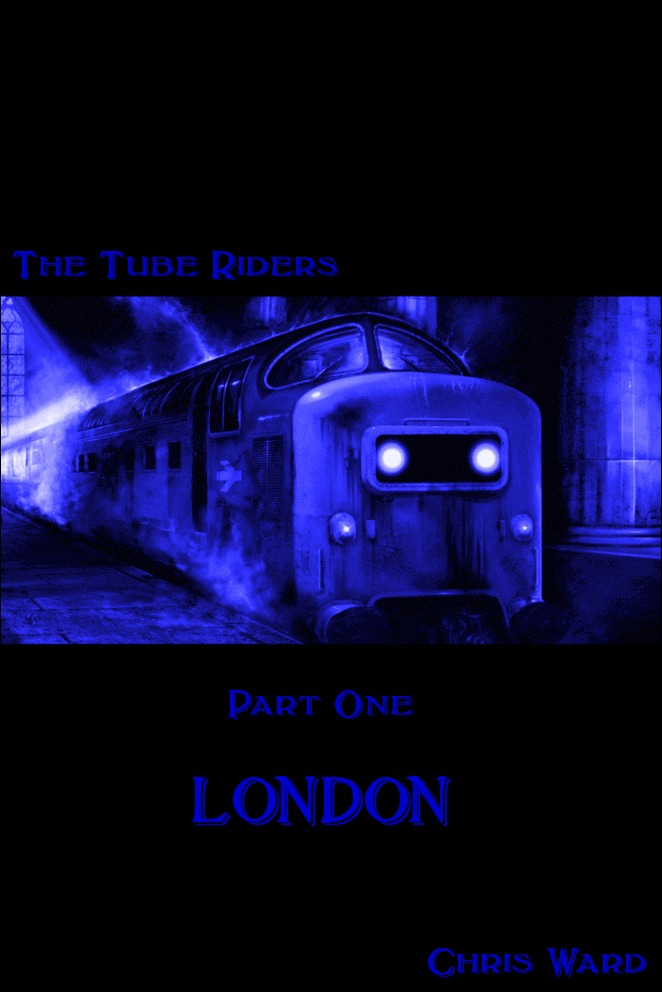
It was on my original list of marketing possibilities, but I've finally got around to trying it.  Tube Riders is now available in three parts, London, Bristol, and Cornwall.  You can see the covers below.  I used the same photograph and just changed the colour tint.  Its not the best, I know, but I did it with the express purpose of giving away part one for free.  I did that last week, and got some 330 downloads.  I've since sold six copies of the books, two of each version.  It's not much, but its a start.


Did I like doing this?  Not really.  In some senses I feel it's cheating the reader, because, while the novel does split neatly into three parts, they are part of the same novel.  However, there are dozens of indies out there who claim to have a 'trilogy' when each novel is barely the same length of one of these parts.  I wrote Tube Riders with an eye on getting professionally published, not as a marketing ploy.  However, I'm making almost no sales and I'm getting almost no exposure, when far, far worse writers are making a living.  I'm no Dickens but just from what I've read of other indies I'd say with all modesty I'm easily in the top 10%.  I glanced at a Look Inside section of a novel of a guy constantly whining on the KDP forums about not making any sales, and he had a simple spelling error in his first sentence.  I mean, come on.

I don't want to cheat anyone, and I want to offer the best product that I can.  But I really want Tube Riders (and my other novels) to sell, because, compared to so much of the other self-published stuff I've seen, they deserve to.

CW.

Thursday, 7 June 2012

Sado Island

Our passenger ferry

We began our journey at the small port town of Naoetsu on the Sea of Japan in Niigata Prefecture.  Apart from ferries to Sado, Naoetsu is famous for a wonderfully cheap but pretty interesting aquarium, a MacDonalds and some rather dirty beaches. 

Ferry travel J-style - no seats!  2nd Class passengers sit in carpeted rooms.
Most people just go to sleep or watch TV.

The journey to Sado takes 2 hours 40 minutes by regular ferry, and costs about 4000 yen per person (cars cost a fair bit more).  A hydrofoil goes from Niigata City, further up the coast, and takes just 40 minutes to make the crossing.


The coast of the mainland receding behind us.


We were accompanied on our journey by a large number of hungry sea birds.

There are a lot of things you're not allowed to do on the ferries,
including punching the staff or breaking the furniture.

When we arrived on the island the weather had closed in, so we headed for a nearby tourist attraction to get a bit of shelter.  The place we went to played on Sado's gold mining history, but was unfortunately a shameless tourist trap.  We paid 700 yen for thirty minutes of sifting through sand looking for tiny pieces of gold, which if we found any (I didn't) we had to pay an extra 500 yen to have them mounted in a little credit card sized pouch.

The place must make a fortune.

By the time we'd finished panning for gold we were getting a little hungry.  The only food available at the gold panning place was a little ramen stand outside.  We proceeded to have the worst ramen I've ever had in my life.  Usually you get a piece of pork in there, but as you can see from the picture below they used processed ham instead.  There was some slimy seaweed stuff in there, too, along with the bland tasting noodles.  Apparently it was "Sado-style" ramen.  It's a wonder they don't all starve to death.

So bad it was good.  Actually, it wasn't, it was terrible.

Afterwards we headed back to the port town of Ogi, where we had some proper lunch.  By this time the rain was incessant, so we decided that since we were soaking wet already we might as well go and take a hot spring bath.  Up on the hill behind Ogi was Ogi Onsen, which some nice views of the harbour.


Lunch was pork cutlets back at the port - very delicious


The area of the island we were in.

Ogi back streets.

Ogi is a sleepy little town which is only really famous for the Earth Celebration, an  annual drumming festival performed by the Kodo, a world famous taiko drumming group who live near the village and tour the world for large parts of each year.

A pretty shrine in Ogi.

A view of Ogi port from Ogi Onsen.

A taribune boat (a model, obviously).

The other thing Ogi is famous for is 'taribune', small, round bottom boats that are rowed by women in traditional dress.  You can get rides near the port for 500 yen but since it was pouring with rain we didn't bother.  I'm not quite sure why the town is famous for them - they seem to be utterly impractical in every way.

So we headed back.  On the return journey we had first class reclining seats, which made things much more pleasant, even if the sea was a bit choppy and the boat was making some horrible grinding noises that made me think it was falling apart.  All in all, an interesting day out!

CW


Friday, 1 June 2012

On "head-hopping" and listening to writing advice

I've recently been giving a polishing edit to the second novel of mine that I intend to self-publish, a stand-alone ghost story set in a small village in Devon, England, called The Man Who Built the World.  This was the fifth novel I wrote, and actually dates back to 2003.

This one is going to be my first cover as
it's my favorite!


Back then I was significantly more prolific than now, but while my writing was sometimes inspired, with some of my best stories dating from that period (and in fact, the plot in TMWBTW is one of my most inventive) I was raw and knew very little about the mechanics of writing.  This was in part because in British school they didn't teach grammar (at least in mine they didn't - I sucked at French because the teacher kept on about tense names and I didn't even know their equivalents in English) and part because for me writing was a natural process, one I didn't think about, I just did it.

For the last nine years I have been an English language teacher, teaching grammar at a variety of levels to first Spanish, then Italian, and now Japanese students.

I know my way around my tenses now, that's for sure.

However, over the same period, pretty much since I've had a decent internet connection, I've been learning about storytelling skills.

I take all the things I read about with a pinch of salt, because in general I trust my own judgement and am pretty confident in my skill to create a well-written story.  I'm no genius, but I've read a lot worse.

However, I do seem to read a lot more about what you shouldn't do than what you should.  And one of those things I've read about a lot of times is what is known as "head-hopping".

In short, this is when you change viewpoint from one character to another in the middle of a scene, in a worst case scenario bouncing your viewpoint back and forth like the proverbial yo-yo.

And in general, it is considered a big no-no.

If you google "head-hopping", you come up with lots of sites telling you not to do it.  In fact, I couldn't find a single one telling me it was okay.

Now, just to clarify, as a general rule, I don't do it.  In my novel, The Tube Riders, I took great care to make sure I didn't do it, with each chapter from the viewpoint of a different character, or if not, with a hash-break in the text to make it clear where changes in viewpoint occurred.

However, when I came to go back over The Man Who Built the World, I found a couple of sections where I had head-hopped a little, in particular the scenes containing the sisters, Elaina and Liana Meredith. Everything I had ever read told me it was a bad idea, but then I realised that due to the nature of their connection (the story is what gets called "paranormal" these days, so its not just a regular flesh and blood connection) it made for an interesting concept to have the viewpoint in the scenes they share together shift from one to the other (not literally mid-sentence, of course, but every few paragraphs).  Convention tells me not to do it, but I don't like to listen to convention.  Convention is for writers who don't have enough spark in their writing and instead have to rely on stylistic correctness in order to convey their message.

Personally, I like the unconventional.  No one who ever read House of Leaves could ever call it conventional, but it's one hell of a book.  Of course, a lot of people do it poorly, but I think there comes a time when any writer who wants to have his or her own voice needs to just can the rule book once and for all.  As long as you trust your judgement, you'll be okay.  I, for one, hate passive verbs and info dumps.  However, something I do love to do is switch from past to present tense midway through a scene.  Okay, so it only happens once in TMWBTW, when Matt is basically going insane, and I think I pull it off pretty well -

(possible spoiler alert!)


Come here, Matty.’ Her voice was like the sound of tatty newspaper, caught on a fence and flapping about in the wind. ‘Come give Mummy hugs.’
Mummy?’ Eyes filled with tears as his head swung up. He turned towards the window, refusing to look at the shape hunched to his left, an amorphous smudge at the edge of his vision.
Come give Mummy hugs, Matty.’
He saw the shape of his own reflection, a black silhouette sat in a black room against a black background, saw the shapes of the things around him, the walls, the door the bed, the – what the hell is that? – all outlined in black. The lines wavered as though alive, a writhing nest of snakes made from shadow, shifting in and out of focus.
And then he sees a shadow deeper than night beside him, hunched and irregular, not man-shaped, not woman-shaped not shaped
he sees his own mouth form slurred words
- come give Mummy hugs, Matty
hears tissue paper rustling in his throat
feels arms fall around his shoulders
(no no rag and bone)
cold like dead tree bark
but can no longer see
can’t see
can’t
see –
Come to Mummy, Matty –’
From out there in the darkness, out beyond the window and the amorphous shapes and the blurred vision and the twisted limbs, out there in the darkness where the rain sheets and the wind roars, the crashing, rolling, cacophony of the fighting, colliding tree limbs form words and call his name –
Matty –


(this might all get edited out in the final draft, of course!)


Okay, shameless plug over.  Writing like this, for better or worse, is not something I plan.  It's something that just comes out when I'm in the grip of the story.  It might work, it might not (I'll leave that up to the reader to decide).  But I think it is important for a writer to tell their story in the way they want it to be told.


Certain styles will irritate people.  Endless info dumping is boring, however the first 80 pages of The Girl with the Dragon Tattoo is pretty much one long info dump, and look how many that's sold (I actually almost quit at about page 70, but its worth soldiering through).  I'm also currently reading a book by John Grisham where one chapter has a three-page info dump followed by a conversation where the viewpoint switches midway through.  It's clear when it happens, but there are a still a lot of writing sites that will tell you not to do this.  However, I'd judge by the millions of books Grisham has sold that his fans can't hate it too much.


Go with what you feel.  Take every naysaying piece of writing advice you read with a pinch of salt and use your own judgement as to whether it works or not.  Remember, one man's trash is another man's gold, and you'll soon see from the reviews whether people are liking it or not.


And on that note, you probably want to ignore everything I've just said.


Write, and enjoy.

CW